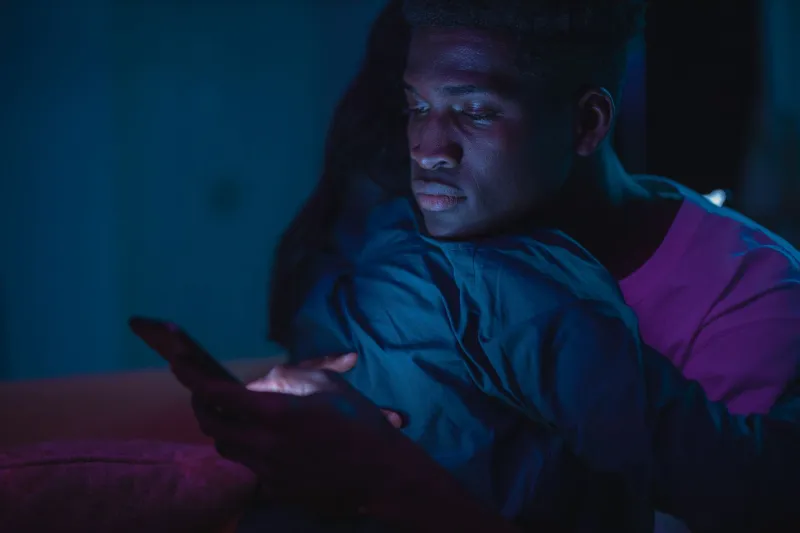
Something strange happens when a creator you've watched for three years suddenly says the wrong thing. Or takes a hiatus. Or just — cries on camera in a way that doesn't feel curated. Your stomach drops. You feel weird. Maybe a little angry. Maybe weirdly hurt.
And then comes the second wave: the guilt about feeling hurt. Because you know, logically, that you don't actually know this person. They don't know you exist. You're one of four hundred thousand subscribers. And yet.
Welcome to the parasocial perfection trap — arguably one of the most emotionally confusing dynamics the internet ever cooked up.
The Illusion Was Always the Product
Here's the thing about modern content creation that doesn't get said enough: the intimacy was never accidental. The ring light, the "no makeup" look, the confessional bedroom setup, the "I'm just like you" energy — all of it is infrastructure. It's designed, consciously or not, to make you feel close.
And it works. God, does it work.
Researchers have been tracking parasocial relationships since the 1950s, when Donald Horton and Richard Wohl first wrote about TV audiences forming one-sided emotional bonds with on-screen personalities. But what we're dealing with now is a completely different beast. Old-school parasocial bonds were built around distance. You watched someone on a screen; there was glass between you. Today's creators are in your earbuds during your commute, on your phone while you eat lunch, whispering into your face at 11pm when you can't sleep. The glass is gone. The distance is gone. And with it, apparently, went any clear sense of where the relationship actually begins and ends.
When the "Real" Version Breaks the Fantasy
The trap springs when creators do one of two things: they either reveal themselves to be flawed humans, or they fail to maintain the version of themselves their audience has emotionally invested in.
Take the creator who's built an audience around being calm, wise, and emotionally grounded — then has a very public meltdown in the comments section. Or the one whose brand is radical authenticity, who then gets caught in a sponsorship deal that feels like a betrayal. Or even simpler: the person who just stops posting for a few weeks because life got complicated.
The audience reaction is almost always disproportionate. Comments spiral into grief, anger, and a kind of collective abandonment narrative that's genuinely uncomfortable to read. "I don't even know who you are anymore." "You used to be different." "This isn't the person I subscribed to."
But here's the honest question nobody wants to sit with: who did you actually subscribe to?
You subscribed to a version. A highlight reel of a person, even when that reel was explicitly framed as raw and unfiltered. Every piece of content is a performance, even — especially — the ones that look like they aren't. And audiences have started confusing access with knowledge.
The Accountability Culture Accelerant
Social media didn't just enable parasocial relationships — it gave them teeth. When a creator messes up now, the audience doesn't just feel disappointed. They feel wronged. And the tools to express that wrongness are right there, one tap away.
This is where things get genuinely toxic. The same intimacy that made you feel close to someone now makes their failure feel personal. And because the creator has spent years cultivating that closeness, the audience believes they've earned the right to weigh in. To demand explanations. To require a specific kind of apology, delivered in a specific format, within a specific timeframe.
It's not accountability, exactly. It's ownership. And creators — particularly younger ones who built audiences before they had any real sense of what that meant — are increasingly getting crushed under the weight of it.
The burnout discourse in creator spaces has been loud for years now, but the conversation usually centers on workload. The parasocial angle gets glossed over. What's actually exhausting isn't just the posting schedule. It's performing a stable, lovable, consistent version of yourself for an audience that will feel personally betrayed if you stop.
The Fan's Side of It (Which Is Also Complicated)
It would be easy to just dunk on audiences here, but that's not the full picture either. The feelings are real. The investment is real. When someone's voice has been the soundtrack to your worst depressive episode, or their videos were the thing you watched every night when you were lonely in a new city — that connection means something, even if it was always technically one-directional.
The problem isn't that people form these attachments. It's that nobody ever taught us what to do with them. There's no etiquette, no framework, no cultural script for "I feel close to this person who does not know I exist and I need to figure out how to hold that in a healthy way."
So instead, people default to the scripts they do have. The ones for real relationships. Which means when the creator disappoints, they respond the way they'd respond to a friend who let them down. With hurt. With anger. With the expectation of repair.
And the creator, on the other side, is suddenly expected to emotionally manage hundreds of thousands of individual relationship ruptures simultaneously. Which is, to put it mildly, insane.
What Changes When We Name It
There's something genuinely useful that happens when people start understanding the mechanics of what they're feeling. Naming the parasocial dynamic doesn't kill the enjoyment — it just puts a border around it. It lets you appreciate a creator's work without turning them into a psychological need. It lets you feel disappointed without escalating that disappointment into a moral verdict.
The creators who seem to navigate this best are the ones who've gotten comfortable naming it themselves. Who'll say directly: "I know some of you feel like you know me, and I'm glad my work has meant something to you, but I'm still a person with a life you're not seeing." That kind of transparency doesn't destroy the connection. It makes it more honest.
And honestly? A more honest connection is probably a more sustainable one — for everyone involved.
Because the alternative is a content ecosystem where creators are locked into performing perfect, stable versions of themselves indefinitely, terrified of a single human moment that might shatter the illusion. And audiences are left cycling through attachment and betrayal on an endless loop, never quite sure why they feel so weird about someone they've never met.
The parasocial relationship was always a little strange. We just forgot to keep that strangeness in view.