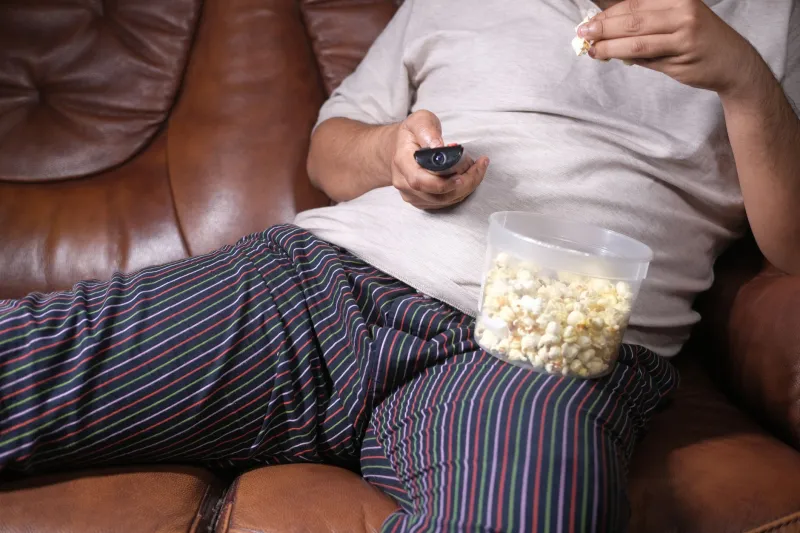
There's a specific kind of shame that hits when someone catches you mid-rewatch of a reality dating show you've seen four times. Not embarrassment exactly — more like the social equivalent of being caught eating cereal for dinner at 11pm. You know it's fine. You know it doesn't matter. And yet the first thing out of your mouth is some version of I know, I know, it's so dumb but—
That little verbal flinch has a name. We've been calling it a 'guilty pleasure' for decades, but what we're actually describing is something weirder and more revealing: the performance of not caring about the thing you obviously care about.
The Apology Before the Admission
Here's what's interesting about the phrase 'guilty pleasure.' It's structured as a confession. You're not just telling someone what you enjoy — you're preemptively defending yourself against a verdict nobody has actually handed down yet. You're filing a disclaimer before anyone asked for one.
Millennials basically invented this as a social ritual. Growing up in an era when cultural taste was treated like a personality report card, you learned fast that liking the wrong thing said something about you. Liking Nickelback in 2003 wasn't just a music preference — it was evidence of something. People weren't just judging the song. They were judging you for not knowing better.
Gen Z inherited that framework and then turbocharged it with irony. If you can't be sincere about liking something, the next best move is to be performatively unserious about it. You don't love Twilight — you're 'obsessed with it ironically.' You don't think the Fast and Furious franchise is genuinely moving — you're 'appreciating it as camp.' The ironic distance becomes a force field. Nobody can clock you as a real fan if you're always kind of making fun of yourself for watching.
When Defense Mechanisms Become the Default
The problem is that irony-as-armor stops working after a while. You use it so consistently that you actually lose track of what you genuinely feel versus what you've decided to perform. Ask someone if they actually like a show they watch religiously and they'll give you a seven-sentence answer that hedges three different ways before landing on 'yeah, I mean, kind of.'
That's not taste. That's anxiety wearing taste's clothes.
Social media made this significantly worse by turning consumption into a public record. What you stream, what you post about, what you quote-tweet — it all feeds into an image you're actively managing. Admitting you cried at a Hallmark movie or that you've listened to the same pop song 200 times this month feels like a crack in the brand. And if your sense of self is partly assembled from cultural signals — which, for most of us, it is — then a crack in the brand is a crack in you.
This is where 'cringe' comes in as a category. Cringe isn't really about quality. Nobody cringes at bad jazz in the same way they cringe at someone unironically loving a Disney Channel original movie. Cringe is about social class — specifically, about being caught outside the invisible fence of what's considered culturally appropriate for your perceived demographic. It's not that the thing is bad. It's that people like you aren't supposed to like it.
The Taxonomy Nobody Agreed To
There's an unofficial hierarchy of acceptable embarrassment that most of us operate by without ever articulating it. Some guilty pleasures are cute and relatable — Taylor Swift, reality TV, superhero movies. Others are more dangerous — certain anime genres, K-pop fandoms, specific video game communities — where the stigma runs deeper and the social cost of admission is higher.
What's wild is how arbitrary the dividing lines are. Two people can consume nearly identical content and have completely different levels of shame about it based purely on how that content is coded culturally at a given moment. Bridgerton is a prestige guilty pleasure. A similar fanfic with the same emotional beats posted on Archive of Our Own is, to many people, embarrassing. The content is comparable. The social permission to enjoy it openly is not.
That gap — between what you feel and what you're allowed to feel without explanation — is where a lot of unnecessary misery lives.
What Sincere Enjoyment Actually Costs You
Here's the thing nobody wants to say out loud: most of the people you're afraid of judging you are doing the exact same thing. They're watching the same algorithmically served content, feeling the same low-level shame, and prefacing their own admissions with the same 'okay don't judge me but.' The whole thing is a collective performance of judgment that nobody is actually fully committed to.
The people who've opted out of this — who just say 'I love this show' without the asterisk — tend to have a noticeably better time. Not because they're braver or more evolved, but because they've stopped spending energy managing an audience reaction that mostly exists in their own head.
Sincerity is genuinely underrated as a vibe. Not in the cringe-as-personality, oversharing-as-brand way that sometimes gets mistaken for authenticity. Just the basic act of saying this thing makes me happy without immediately explaining why that's okay or how you know it's technically bad.
The Permission You're Waiting For
You don't need a cultural critic or a Reddit thread or a Letterboxd consensus to validate what you enjoy. The taxonomy of cringe is made up. It gets revised every few years anyway — half the things that were embarrassing to love in 2012 are now critically acclaimed comfort media. The other half are still embarrassing, but only to people who've decided to make that their whole thing.
Like what you like. Tell people about it without the disclaimer. The worst case scenario is that someone thinks you have weird taste, which is genuinely not that bad of an outcome.
The best case scenario is you find the other people in the room who've been watching the same thing for years and couldn't say so either.