Your Server Is Not Your Therapist (But We're All Pretending It Is)
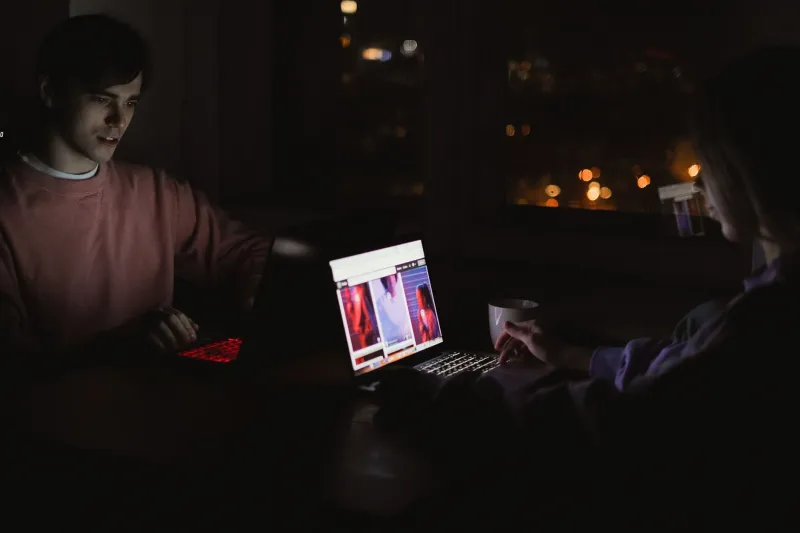
Somewhere right now, a person is typing a message into a Discord server called something like #safe-venting or #daily-check-in. They're not texting a friend. They're not calling a hotline. They're talking to forty strangers who share a mutual obsession with a niche anime, a specific subgenre of ambient music, or a particularly esoteric corner of internet culture. And for a lot of people, that's the realest human connection they're going to get today.
This is not a tragedy piece. It's also not a wholesome redemption arc. It's something messier and more honest than either of those things.
The Death of the Third Place (And What Crawled In to Replace It)
Urban sociologist Ray Oldenburg coined the term "third place" back in 1989 — the idea that healthy communities need a neutral social space outside of home and work. Bars, barbershops, diners, bowling alleys. Places where you just exist with other people without an agenda.
In 2025 America, most of those places are either dead, unaffordable, or aggressively monetized. The coffee shop charges $8 for a latte and passive-aggressively times your table. The bar requires you to perform extroversion on command. The community center got defunded. And if you're neurodivergent, socially anxious, disabled, or just deeply weird in ways your immediate geography doesn't accommodate, the traditional third place was never really built for you anyway.
Enter Discord. What started as a voice chat app for gamers has quietly become the de facto social infrastructure for a significant chunk of the American population that doesn't fit neatly into conventional community structures. There are servers for people with chronic illness, servers for specific fandoms, servers for people who are scared of phone calls, servers for people who just want to watch someone else play Stardew Valley at 2 a.m. and feel slightly less alone.
The algorithm didn't build this. The people did. And that's both the miracle and the problem.
The Unspoken Emotional Economy of Moderation
Every functional Discord server runs on the invisible labor of moderators — usually unpaid, usually deeply invested, usually one bad week away from a complete breakdown.
Here's what mod work actually looks like in a mental-health-adjacent community: you wake up to DMs from three different members who had crises overnight. Someone posted something that triggered another member. A new user showed up clearly in distress and you have to figure out in real time whether to engage, escalate, or quietly point them toward a hotline without making them feel like they're being managed. You write a new rule because something happened that the old rules didn't cover. You mediate a conflict between two people who've never met but feel deeply wronged by each other. You do all of this for free, because you care about the community, because someone has to, because you were here first.
The burnout is staggering and almost entirely invisible. There's no HR department. There's no employee assistance program. When a mod cracks, the server either fractures or someone else quietly picks up the weight. The communities that feel the most like a safe harbor are often being held together by one or two people who are themselves barely keeping it together.
This isn't a criticism of Discord or the people who build these spaces. It's a structural problem dressed up as a personal one — which, if you've been paying attention, is kind of America's whole thing.
Parasocial Belonging and the Illusion of Intimacy
Here's where it gets genuinely complicated. The connections people form in small, tight-knit Discord servers are not fake. The care is real. The inside jokes are real. The feeling of being known — of having people who notice when you're gone, who remember what you said three weeks ago, who show up in your DMs when you post something sad — that's real.
But it's also a very specific kind of real that has some significant gaps.
The parasocial dynamics that fuel creator-audience relationships on Twitch or YouTube exist in miniature inside community servers too. You can spend two years talking to someone daily and still not know their last name, what city they live in, or whether they'd answer the phone if you called them at 3 a.m. in an actual emergency. The intimacy is genuine but it's also curated — everyone is performing a version of themselves that the platform accommodates, which is to say: text-based, asynchronous, and safely behind a screen.
For people with social anxiety or trauma histories around in-person relationships, this can feel like a feature rather than a bug. And honestly? Sometimes it is. Sometimes the training wheels of a low-stakes online friendship are exactly what someone needs to remember that connection is possible. But sometimes the server becomes a substitute for the harder work of building relationships that can hold weight in three dimensions.
The question isn't whether online community is valid. It's whether we're using it as a bridge or a bunker.
So Can a Chat Room Actually Save You?
Short answer: kind of, temporarily, and not alone.
Longer answer: the research on online community and mental health is genuinely mixed. Social connection in any form reduces isolation, and isolation is a significant driver of depression, anxiety, and worse. So yes, a Discord server where you feel seen and valued is doing something real for your nervous system. That matters.
But digital spaces also have a way of providing just enough relief to keep you from addressing the underlying architecture of your loneliness. If the server is always there, always available, always populated with people who get you — the urgency to build anything outside of it quietly fades. The server becomes load-bearing infrastructure for your emotional life, and nobody designed it to carry that weight.
The mods know this. The long-timers know this. And most people, if they're honest with themselves in the quiet moments between notifications, know this too.
The Part Nobody Wants to Admit
We built these communities because the physical world failed to make space for us. That's not a personal failing — it's a design flaw in the culture. Neurodivergent people, queer people, people with niche obsessions and unconventional inner lives, people who are just a little too much for their immediate geography — the traditional third place wasn't built with them in mind, and the market-driven version definitely isn't.
Discord servers are a creative, human, and genuinely impressive workaround. The fact that millions of people looked at a broken social landscape and went "okay, we'll build our own thing" is kind of beautiful.
But a workaround isn't a solution. And the longer we treat digital community as a complete substitute for the physical and institutional infrastructure of belonging, the more we're letting the systems that failed us off the hook.
Your server is real. The people in it are real. And you probably need both them and something more — which is maybe the most honest thing anyone's said about this whole situation.
Now go drink some water and maybe text someone your actual phone number. The #daily-check-in channel will still be there.