Your Favorite Obscure Creator Knows You Better Than Your Best Friend Does
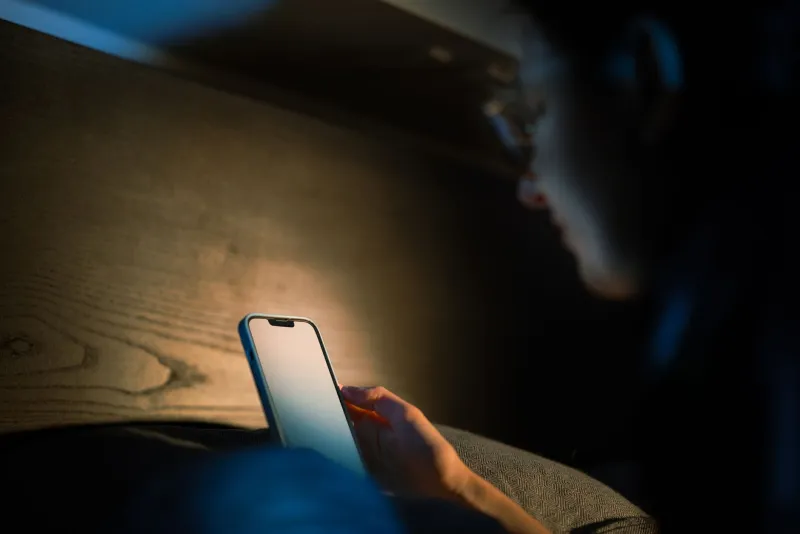
Somewhere around 2 a.m., after your fourteenth consecutive video from a creator with 47,000 subscribers who reviews discontinued fast food items and talks about their childhood in rural Ohio, something weird happens. You feel seen. Not seen by them, obviously — they have no idea you exist. But seen by the whole experience of it. The specific combination of niche subject matter, casual delivery, and low-production intimacy hits a part of your brain that your actual social circle hasn't touched in months.
This is not an accident.
The Algorithm Is a Matchmaker, Not a Search Engine
We've spent years treating recommendation systems like they're just really good at guessing what content we want to watch next. That's a convenient simplification. What platforms like YouTube, TikTok, and Spotify are actually doing is building a psychological profile granular enough to identify your emotional state, your loneliness threshold, and the exact flavor of parasocial relationship you're most susceptible to — then delivering a creator who fits that profile like a custom order.
The more obscure the creator, the more potent the effect. When an algorithm serves you someone with a massive mainstream following, you're aware that millions of other people are also watching. There's no intimacy in that. But a creator with 30,000 deeply loyal subscribers who makes forty-minute videos about obscure Japanese train stations? That feels like a secret. It feels like the algorithm chose you specifically. And that feeling of being chosen — even by a piece of software — activates something genuinely powerful in the human brain.
Researchers call the psychological framework here "parasocial interaction," a term coined in the 1950s to describe the one-sided emotional bonds people form with media figures. What's changed isn't the concept — it's the delivery mechanism. The algorithm has learned to serve you not just content you'll enjoy, but creators whose specific energy will bond to your specific loneliness the way a key fits a lock.
Niche Is the New Neighborhood
There's a reason the parasocial economy runs hottest in niche spaces. Mainstream celebrity fandom has always existed, but it comes with a built-in awareness of its own absurdity. Nobody genuinely believes Taylor Swift is their personal friend. The scale is too big, the production too polished, the distance too obvious.
But a creator who makes lo-fi videos about restoring vintage synthesizers, or a podcaster who does deep-dive episodes on obscure true crime cases from the 1930s, or an indie musician who posts voice memos of half-finished songs at midnight — these people feel reachable. They read comments. They reply occasionally. They share details about their lives that feel unfiltered. The production quality is low enough to feel real. The audience is small enough to feel intimate.
And crucially, the content is specific enough that discovering it feels like finding your people. "This creator gets it" is often code for "this creator gets me," which is a feeling that a lot of Americans — isolated by geography, remote work, the slow collapse of third places, and the general social thinning that happened post-pandemic — are genuinely starving for.
The algorithm knows this. It's not serving you the obscure synthesizer guy because you searched for him. It's serving him to you because your watch history, your pause patterns, your rewatch behavior, and your engagement timing have collectively communicated that you are a person who needs to feel like part of something small and specific. And it has the inventory to match.
The Creator Economy's Dirty Dependency
Here's where it gets uncomfortable. The creator economy — the whole apparatus of Patreon tiers, Discord servers, exclusive content drops, and merchandise runs — is structurally dependent on parasocial attachment functioning as a substitute for community.
A creator with 50,000 subscribers doesn't need all 50,000 of them to feel deeply connected. They need maybe 2,000 people who feel like that creator is part of their daily emotional life. Those are the people who buy the merch, join the membership tier, show up to the live streams, and evangelize to their actual friends. The parasocial bond is the monetization engine, and the algorithm is the fuel.
None of this means the creators are cynical or malicious. Most of them are genuinely trying to connect, genuinely grateful for their communities, and genuinely unaware of the psychological architecture being constructed around their content without their input. The platform is the architect. The creator is just the product being used to build it.
But there's a feedback loop here that nobody's talking about honestly: the more isolated a person becomes, the more the algorithm can offer them. The more the algorithm offers them, the less incentive they have to do the harder work of maintaining real-world relationships. The less they maintain those relationships, the more isolated they become. Rinse. Repeat. Subscribe.
What "Known" Actually Feels Like Now
Ask someone deep in a parasocial relationship with a niche creator what they get out of it, and they'll often describe something that sounds a lot like friendship. They know the creator's opinions, their humor, their anxieties, their history. They feel like they'd recognize them at a grocery store not as a celebrity, but as a person they know.
What they're describing is intimacy without reciprocity. And that distinction matters enormously, because one of those things is a relationship and the other is a feeling manufactured by consistent content delivery and algorithmic reinforcement.
The weird part? For a lot of people, the manufactured feeling is meeting a genuine need. The loneliness is real. The comfort is real. The sense of belonging to a small, specific community of people who all love the same obscure thing — that's real too, in its way. The Discord server for a niche creator's fanbase can function as a legitimate social space. People make actual friends there. The parasocial relationship becomes a portal to something more reciprocal.
But that's the exception, not the design. The design is retention. The design is the next video autoplaying before you've consciously decided to watch it. The design is making you feel known by a system that doesn't know you at all — just your patterns, your gaps, and the specific shape of what you're missing.
The Part Nobody Wants to Say Out Loud
Being understood by an algorithm feels more intimate than being misunderstood by a human. That's the actual thesis here, and it's a genuinely strange thing to be true about the world we've built.
Your coworker doesn't know you listen to ambient music when you're anxious. Your family doesn't know about the niche documentary rabbit hole you've been down for three weeks. Your friends don't have the bandwidth to engage with every obscure interest you cycle through. But the algorithm has logged all of it, cross-referenced it, and used it to build a version of you that it serves back in the form of perfectly calibrated content.
That's not community. But it's doing community's job for a lot of people right now. And until we build something better — more third places, more slow friendships, more tolerance for the awkward friction of actual human connection — the loneliness algorithm is going to keep winning.
It's very good at its job. We made it that way.