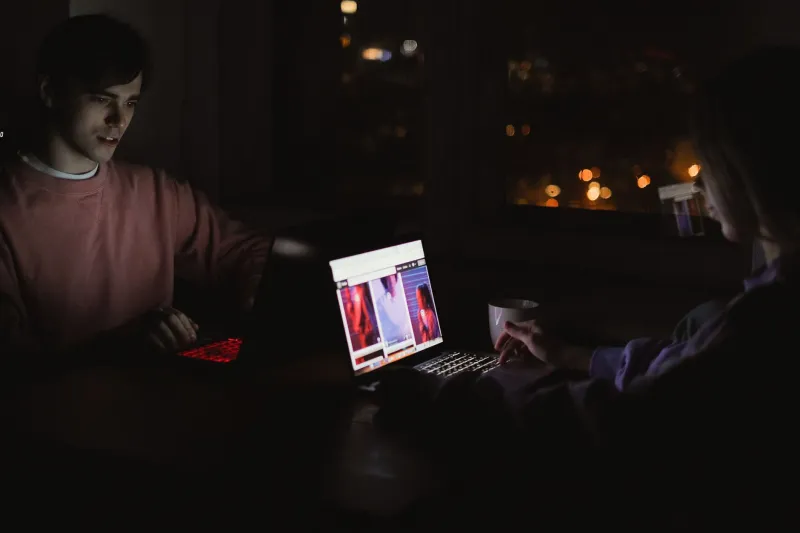
Somewhere between your third unanswered text to a college friend and your fourteenth hour in a Discord server dedicated to obscure city-pop vinyl, something shifted. You stopped thinking of the server as a supplement to your social life. It became your social life. And honestly? It's kind of better in there.
This isn't a hot take designed to make you feel bad about your screen time. It's just a thing that happened — quietly, incrementally, with the soft inevitability of a notification ping at 2 a.m. from someone you've never met in person but who somehow remembered your birthday.
The Architecture of Belonging
Discord was built for gamers. That's the origin story everyone knows. But somewhere along the way it became something weirder and more interesting: a platform that accidentally figured out how to replicate the feeling of a third place — that sociological concept for the coffee shops, barbershops, and community centers that used to anchor American social life before they all got priced out or bulldozed.
The genius, if you want to call it that, is in the granularity. A well-run Discord server doesn't just give you a community. It gives you channels. A place for memes, a place for venting, a place for sharing what you ate, a place for the specific niche interest that brought you there in the first place. It's social infrastructure with a table of contents. Real life rarely comes that organized.
And when the infrastructure is good — when the mods are present, the rules are enforced with actual care, and the regulars have developed their own inside jokes and rituals — it produces something that genuinely functions like a neighborhood. Except the neighbors actually respond.
Why Your IRL Friends Feel Like a Beta Test
Here's the uncomfortable part. For a lot of people, especially younger Americans who came of age during the social atomization of the 2010s and the full-scale collapse of casual hangout culture during the pandemic, real-life friendships have started to feel like a lot of upfront work for an uncertain return.
Maintaining an adult friendship in the U.S. is logistically brutal. You've got to sync calendars, navigate geographic sprawl, manage the weird power dynamics that come from people being in wildly different life stages, and somehow stay emotionally available for someone you might see three times a year. It's a part-time job with no onboarding.
A Discord server, by contrast, is always open. You can lurk when you're depleted and engage when you've got something to give. The social contract is lighter. Nobody's going to be visibly hurt if you don't respond for four days. The community absorbs your inconsistency without making it a whole thing.
That's not laziness. That's a rational response to bandwidth scarcity.
The Mod as a New Kind of Social Architect
One of the stranger dynamics that's emerged from this shift is the parasocial relationship people form with server moderators and community founders. These are often unpaid volunteers who spend enormous amounts of time shaping the culture of a space — setting the tone, resolving conflicts, deciding what kind of community this is going to be.
And people attach to them. Not in a creepy way, necessarily, but in the way you'd attach to a really good community center director or a beloved neighborhood bartender. Someone who holds the space, who remembers context, who enforces norms in a way that feels fair.
The difference is that moderators often stay somewhat distant by necessity. They're managing dozens or hundreds of people. The relationship is asymmetrical. You feel like you know them; they know you as one of many regulars. But somehow that asymmetry is less exhausting than the full reciprocity required by a traditional close friendship. You can appreciate someone who holds the room without having to carry their emotional weight in return.
It's a different kind of intimacy. Scaled, but not hollow.
The Backup Server Problem
Here's where it gets philosophically messy. When your Discord community starts to feel more real — more consistent, more emotionally resonant, more you — than your offline existence, the offline existence starts to feel like the temporary situation. The thing you're tolerating until you can get back to where people actually get it.
Psychologists have a word for the cognitive dissonance this produces, but we don't need jargon to understand the feeling. It's the Sunday night sensation of dreading Monday not because of work but because work means being around people who don't know your references, don't share your humor, and will definitely ask you to explain things you don't feel like explaining.
Your real life becomes the backup server. Functional, technically, but missing all the customization.
This is worth sitting with, because it's not entirely a problem to be solved. For a lot of people — particularly those who are queer, neurodivergent, deeply into niche subcultures, or just geographically isolated from their people — online community isn't a consolation prize. It's the actual prize. The place where they found the people who made sense.
But it does raise a question about what we're building toward. If the most nourishing social infrastructure most people have access to is hosted on a free platform owned by a company that could change its terms of service tomorrow, that's a fragile foundation.
What Gets Lost in Translation
None of this is to say that Discord community is a perfect substitute for embodied social life. There are things that don't transmit through text channels — the physical presence of someone who shows up when you're sick, the eye contact that confirms something wordless, the shared experience of being in a room together when something happens.
But it's worth asking whether we've been romanticizing offline social life in ways that don't hold up. American social infrastructure has been quietly crumbling for decades. Bowling leagues, civic organizations, religious communities — the institutions that used to create default belonging have been losing members since the '80s. The loneliness epidemic didn't start with smartphones.
Discord servers didn't create the void. They just moved in when the lease was available.
So What Do We Do With This
Probably the most honest answer is: keep going. Keep building the servers, keep showing up in the channels, keep appreciating the mods who hold things together for free because they believe in the community they're curating.
And maybe also, when the energy is there, try to let some of that warmth leak back into the offline world. Not because the online stuff isn't real — it clearly is — but because the two don't have to be in competition.
The server isn't your enemy. Neither is your real life. They're just both trying to do the same thing: give you somewhere to land at the end of the day where somebody knows your name and doesn't make you explain the bit.
That's not weird. That's just what people need. The platform is new. The need is ancient.