Thrift Store Rockstars: How Indie Music's Weirdest Acts Became Its Most Powerful
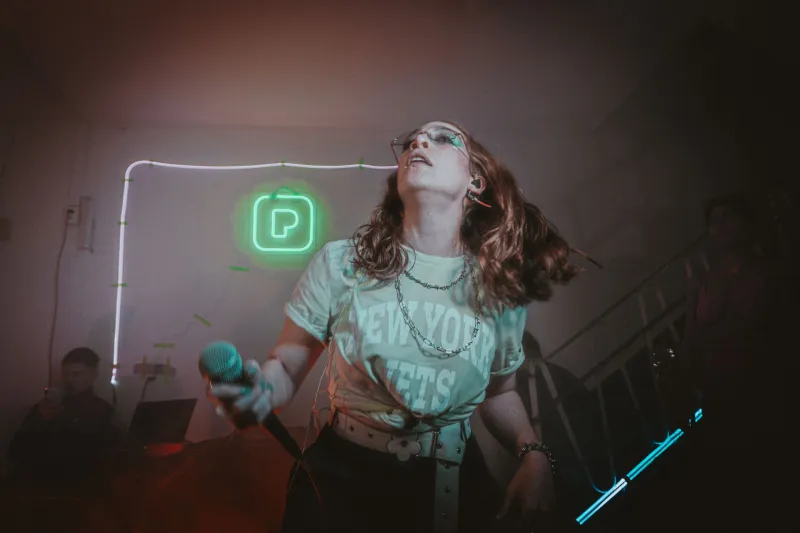
There's a moment in Wet Leg's video for "Chaise Longue" where Rhian Teasdale and Hester Chambers stare directly into the camera with the kind of blank, unimpressed expression that somehow communicates everything. They're not trying to be cool. They're not trying to be beautiful. They're just... there, being deeply, gloriously weird — and it absolutely works.
This is the new playbook. And honestly? It's been a long time coming.
The Death of the Polished Aesthetic
For a solid chunk of the 2010s, the dominant energy in indie music was a kind of studied nonchalance that still required an enormous amount of effort. Think carefully disheveled hair, vintage band tees that cost $90 at Urban Outfitters, and press shots that looked like they were taken by a fashion photographer pretending not to be a fashion photographer. The aesthetic was curated to look uncurated. It was exhausting.
What's happening now feels genuinely different. Artists like Wet Leg aren't performing anti-fashion — they're just not particularly interested in fashion as a concept. Their style is more "found things" than "found aesthetic." Oversized blazers, sensible shoes, the general vibe of someone who got dressed in the dark and ended up looking kind of incredible by accident. It's chaos with good bone structure.
Chappell Roan pushed this even further by going in the complete opposite direction — full camp, full drag-adjacent maximalism — but arriving at the same destination. She's not interested in being palatable. She's interested in being a lot. And audiences in 2024 are absolutely eating it up.
Why Weirdness Is the New Brand Strategy
Here's the thing about being weird on purpose: it's actually incredibly hard to fake. Audiences, especially younger ones, have finely tuned sensors for authenticity. They've grown up watching influencers perform relatable-ness so aggressively that the performance became its own kind of exhausting content category. Gen Z, in particular, has developed a near-allergic reaction to anything that feels manufactured.
Bands like Wet Leg and MUNA understood something important — that leaning into your actual personality, however strange or specific, creates a more durable connection with listeners than any brand strategy session could manufacture. MUNA's emotional directness and queer-specific joy isn't a marketing angle; it's just who they are. And because it's real, it resonates in a way that's almost uncomfortably sincere.
The result is fanbases that feel less like traditional audiences and more like communities. These aren't people who just stream the albums — they're people who show up to shows in homemade costumes, who create elaborate fan edits, who get tattoos of inside jokes from music videos. The weirdness becomes shared property.
The Thrift Store as Cultural Statement
There's also something genuinely political happening underneath all of this, even if it's rarely stated explicitly. Rejecting polished aesthetics in an industry that has historically demanded them — especially from women — is not a neutral choice. When Rhian Teasdale wears something that looks like she borrowed it from her aunt's closet circa 1987, that's a refusal. A small one, maybe, but a refusal nonetheless.
The thrift store aesthetic that runs through so much of this new indie wave carries a specific meaning in the current economic moment. When housing costs are brutal, student debt is crushing, and the idea of buying a brand-new outfit for a concert feels genuinely absurd, artists who dress like they shop at Goodwill aren't just being quirky — they're speaking the same language as their audience.
It's worth noting that this doesn't mean these artists are broke (they're not, mostly) or that the aesthetic is purely economic. But it signals something about values and priorities that resonates with people who are genuinely navigating financial stress.
Celebrity Culture's Weird Hangover
Another thing driving this shift: celebrity culture is having a bit of a rough moment. The parasocial relationships that powered the stan economy through the 2010s have gotten complicated. People are tired of following artists who feel like brands rather than people. The endless discourse around celebrity image management, the PR relationships, the carefully worded apology statements — it's all started to feel like a lot of overhead for what should just be about the music.
Artists who exist outside that machine — or who at least appear to — feel refreshing by comparison. Wet Leg doing press interviews where they seem genuinely amused by the whole situation. Chappell Roan telling audiences she's not their mother and she needs them to respect her boundaries. MUNA just making deeply personal art about queer love without packaging it for mass consumption. These are people who seem to understand that the celebrity industrial complex is kind of a bit, and they're not entirely interested in playing along.
What Comes Next
The interesting question is what happens when anti-fashion becomes fashion. It always does, eventually. The moment a major label starts deliberately manufacturing "weird" acts to capitalize on this energy is the moment this whole thing starts to curdle.
But right now, in this particular window, something genuinely exciting is happening in indie music. The artists getting the most attention are the ones who seem least concerned with getting attention. The ones building the most devoted fanbases are the ones being most specifically, stubbornly themselves.
That's not a formula. You can't reverse-engineer it. And that's exactly what makes it work.
Wet Leg's second album is going to be interesting. So is whatever Chappell Roan does next. So is basically everything MUNA touches. Pay attention — not because they're telling you to, but because you genuinely can't look away.